

CoTreat · Population Health Report
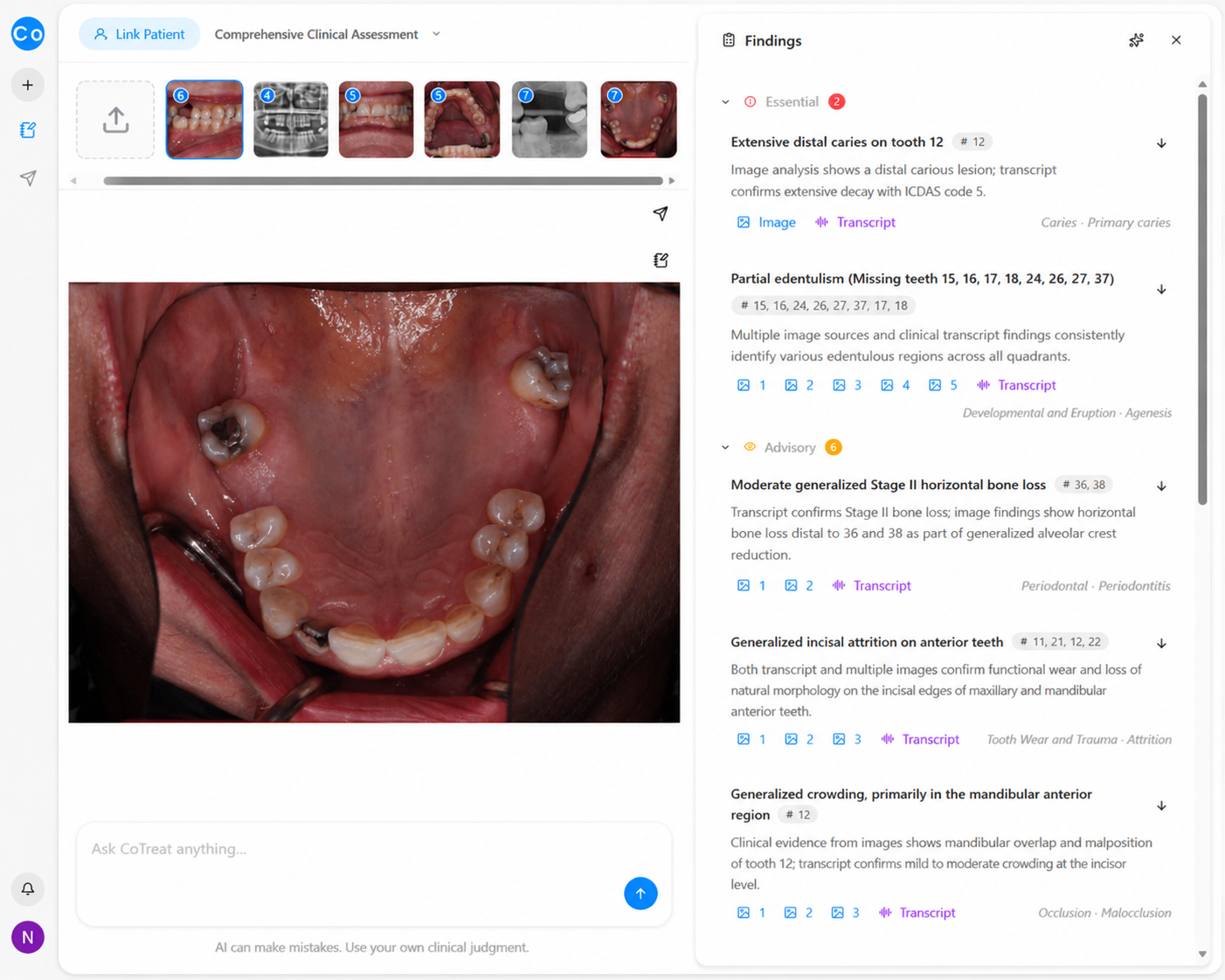
Dentistry is often left out of the healthcare inequality conversation.
But new findings from CoTreat suggest oral health may be one of the clearest and most measurable examples of healthcare inequity in Australia today.
How it was studied
Public vs. Private Patients
Public patients were significantly more likely to present with…
more likely to present with missing teeth
more likely to exhibit tooth wear
more likely to have advanced periodontal bone loss
more likely to experience complete edentulism
more likely to develop root surface caries
The report also found substantially higher rates of deep caries reaching the pulp — disease severe enough to require root canal treatment or extraction.
Importantly, these findings were generated using the same AI analysis system across both patient populations. The imaging protocols, staging systems, and classification criteria were identical. What changed was the population itself.
A Pattern Seen Globally
Lower-income populations everywhere show more untreated disease. What is new here is the visibility.
The disparity is not abstract — it is anatomically visible and measurable, tooth by tooth, across tens of thousands of people. The trends in the CoTreat dataset mirror broader international public health findings on untreated dental disease, tooth loss, and reduced access to preventive care.
The Exceptions Tell Their Own Story
A few conditions were rarer in public patients. That is not good news.
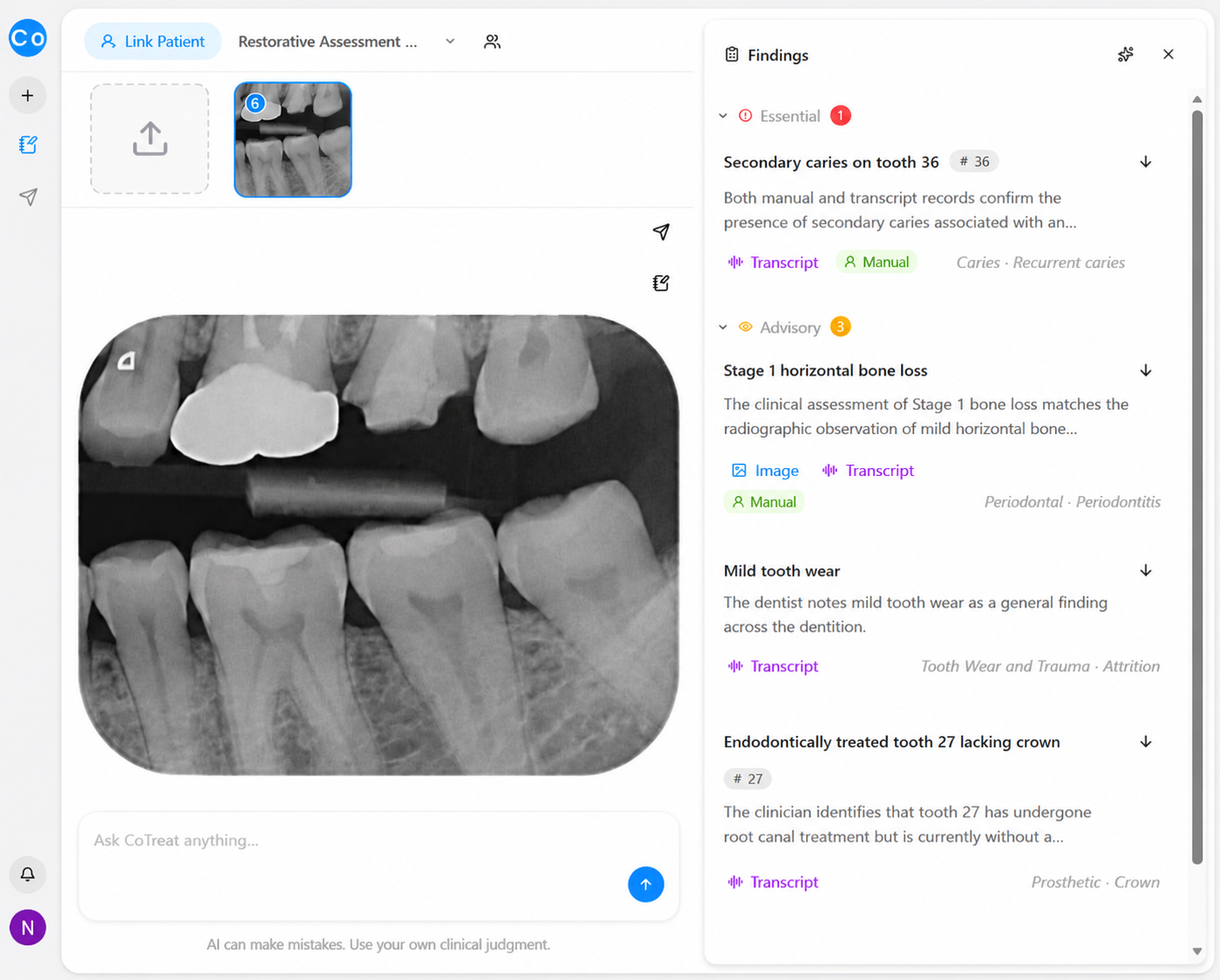
Secondary caries and periapical pathology actually appeared less often in the public group. The simpler, more confronting reading is that there were fewer remaining teeth and fewer existing restorations left to fail. You cannot get decay around a filling you were never able to have.
Periapical Pathology
0.8×Marginally lower publicly — not a marker of health. Many teeth that would have developed lesions were already extracted, removing them from the data.
Secondary Caries
0.8×Lower publicly only because there are fewer restorations — fewer fillings, fewer margins at risk. The restorative cycle requires a filling that, in many public patients, was never placed.
The same AI system that identified these disparities can help close the gap.
That’s one of the most interesting opportunities for AI in healthcare.
Earlier detection
More consistent triage
Clearer conversations
Better resource allocation
Beyond Dentistry
Image databases may contain a deeper public health story than previously appreciated.
This analysis demonstrates how large-scale AI-assisted imaging can be used not only for clinical workflows, but also for population-level health surveillance.