
Geeny, Jordan, Callum,
Firstly, thank you. Dental on Flinders is very lucky to have you.
I know that you want to keep growing as clinicians, and that you want to have a good life outside these walls. I want to make sure the work stays satisfying, and that it rewards you properly for how good you are.
The market is getting harder
Patients are watching their money. Our competitors are reacting to this by spending more and more on Google and social media ads, and some are even cutting their prices to win patients on cost alone. I do not want to play either game. We do not have the budget to compete effectively on Google or Meta. And I will not enter a race to the bottom on price, because the only way that ends is doing worse work for less money.
did not see a dental professional in the past year, and cost is the most common reason for delaying or skipping care.
Sources: ABS Patient Experience Survey 2023-24 via AIHW · LocaliQ/WordStream US search benchmarks · Varos Meta CPM data, all industries
How we will win is through patient care and experience
Above and beyond service. This is what I want each of you to become a little obsessed by. But let’s put some colour into what that actually looks like.
Most patients don’t like going to the dentist. Let’s acknowledge that, and then try to change it. Let’s go above and beyond. Let’s make our patients feel truly cared for. And care for them the way we’d want to be cared for if the situation were reversed. One way to do this is to improve the post-appointment experience. A thoughtful SMS, an email, a CoTreat Pack, or a full presentation if the case needs it. Here is how I think it should work:
Treatment appointments get a quick SMS or email with a summary of what was done, post-op instructions, or other warm messaging to show you care beyond the chair. Use the practice’s online mobile number. You don’t need to use your personal number.
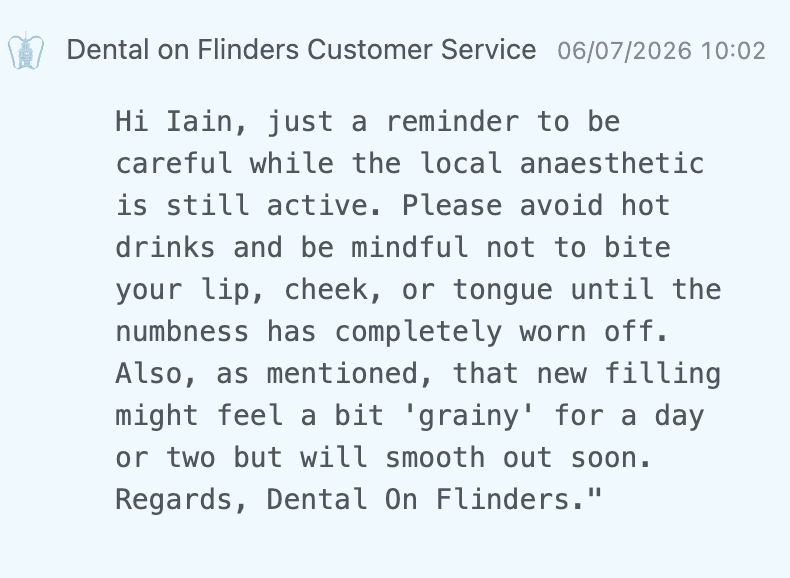
Sent to a patient yesterday, shortly after a filling. A minute of work that gets remembered
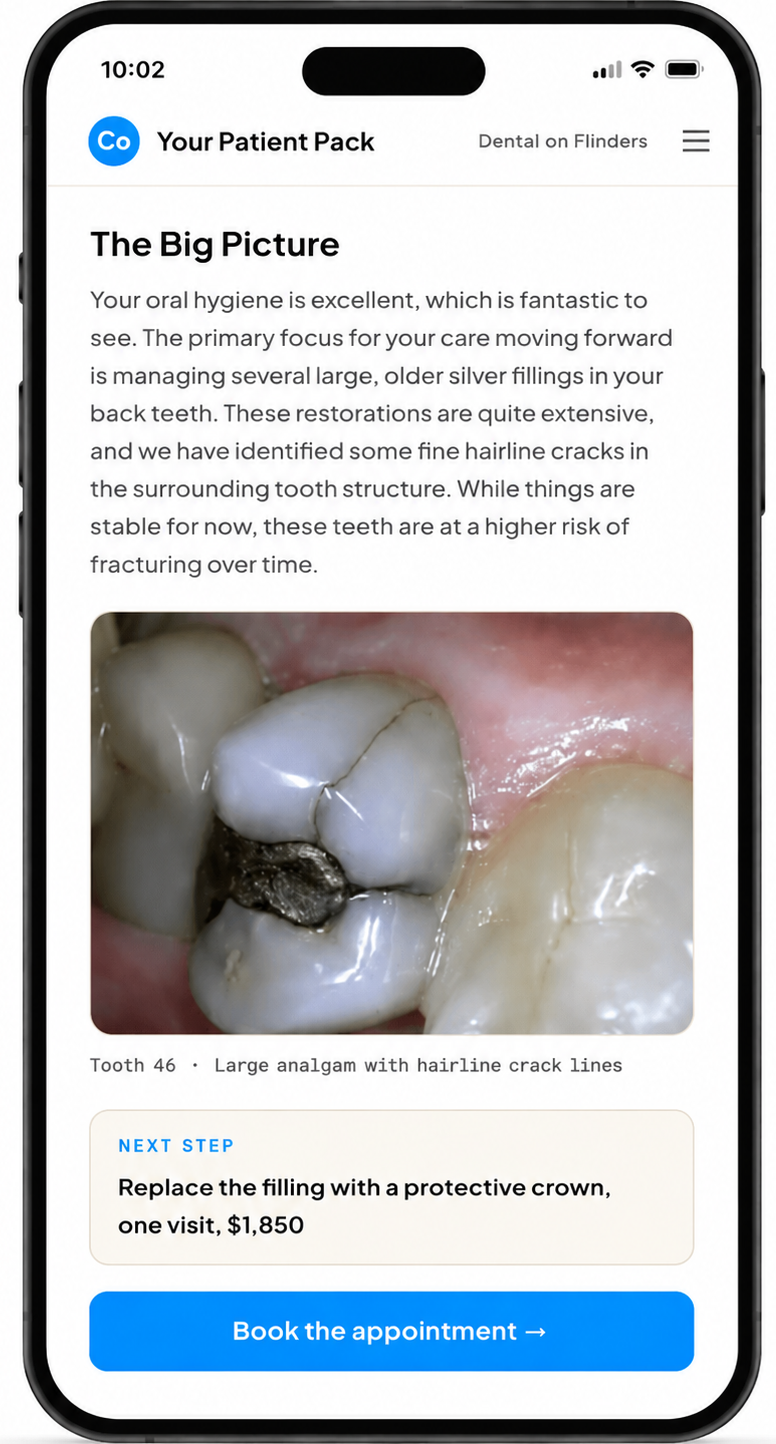
A simple pack as the patient sees it. One image, a plain explanation, the next step and the cost
When quoting small cases, around two thousand dollars or less, patients get a simple pack. A clear image of the problem, a plain explanation of the fix, the next steps, and the costs. Nothing heavy. Just enough that they can see it and act on it quickly.
Large cases get a full presentation. This is the one that earns the trust. It helps them understand their options, visualise what they will look like afterward, weigh the pros and cons, and see the roadmap, the timings, the costs, the payment solutions, and exactly who will be at each appointment.
Dental treatment proposal for Jane Smith
Includes options, visualisations, costings and a proposed roadmap


One of ours, sent to a patient last month. Details anonymised. Tap through it the way they did at home
Check-up and clean patients who need no treatment get a data and prevention pack. This might be the most important of them all. It tells them we have tracked their health, and we are being transparent, and handing them the tools to stay well. That is how you keep a patient for a lifetime. These packs can also subtly contain a button for elective options like aligners, implants and whitening if the patient is interested.
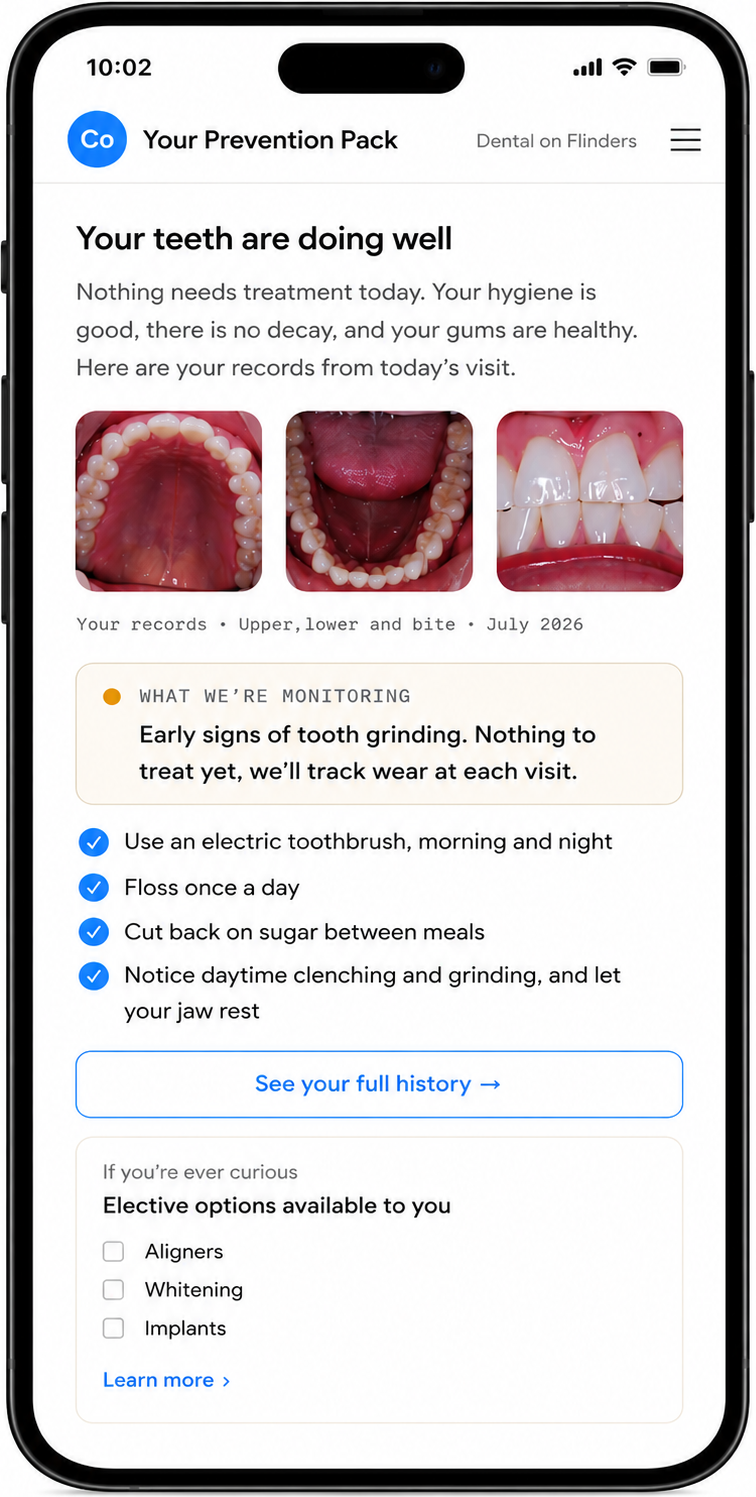
Nothing pushed. Their records, what we are watching, and one quiet door for the curious
Every pack is an asset
Patients show what you send to their partner, parents and friends. Somewhere in that conversation the other person realises their own dentist has never done anything like this for them. That is how we will grow. Not with expensive ads. But by going above and beyond, and earning word of mouth referrals at scale.
The team benefits from what you send
When you send every patient something, it’s not just the patient that has more clarity. Front desk, treatment coordinators, DAs and the other dentists have crystal clarity on what the patient expects and understands. They can act and communicate with much more confidence.
What is work?
Lastly, we have inherited, from dental school and most previous workplaces, an idea that work is what we do with drill or scaler in hand. But work is also communication. Writing emails. Building packs or presentations. Being available for a scheduled phone call. Even an in-person secondary consultation to help someone move forward with a large case. This is also work. Often it is the work that matters most, and can change lives. Both for the patient, and yourselves. This is the work that is neglected by the majority of dentists out there, and this work can be a sustainable competitive advantage for us.
So Geeny, Jordan, Callum, let’s get into the habit of sending every patient something. I suspect you will actually come to enjoy it more than you expect. Going above and beyond, and delighting patients with a level of service they did not expect, is incredibly rewarding.