
Root Canal Treatment vs Extraction
When Is Long-Term Tooth Preservation Still Justifiable?
🧭 Clinical Decision Snapshot
Clinical confidence begins with the right question: not "Can this tooth be treated?" but "Can this tooth be predictably retained?"
A tooth may be technically endodontically treatable and still be a poor candidate for long-term preservation if the restorative, structural, periodontal, or patient-level prognosis is unfavorable.
The decision between root canal treatment and extraction is therefore not a contest between procedures. It is a prognosis-based judgment about whether long-term retention remains biologically, structurally, and functionally defensible for this specific tooth in this specific patient.
Key Clinical Takeaways
🔍 Clinical Assessment
A prognosis-based RCT-vs-extraction decision starts before treatment planning starts.
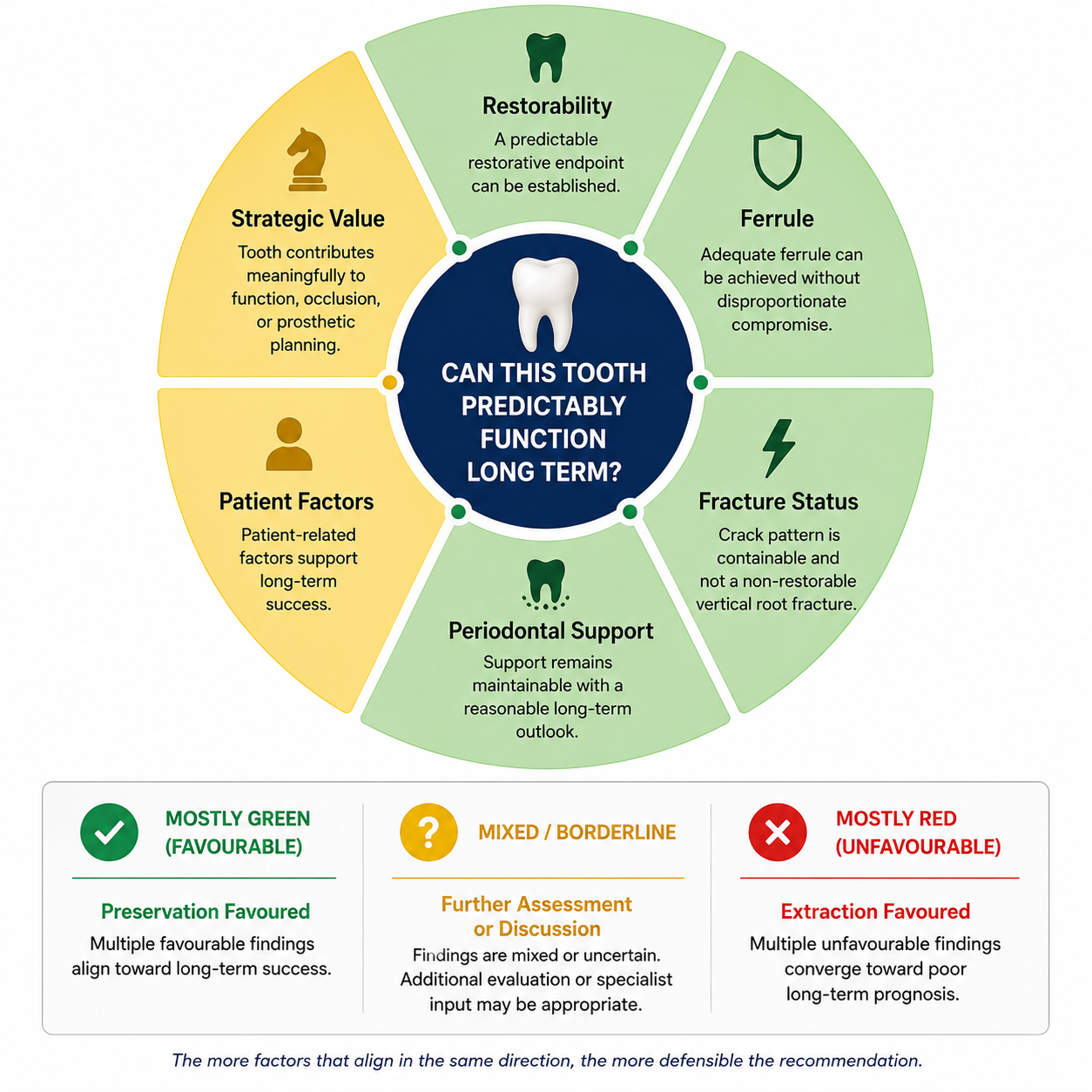
Can This Tooth Be Predictably Preserved?
The quality of the final recommendation cannot exceed the quality of the assessment that precedes it. Individual findings matter, but they are rarely decisive alone. A reliable RCT-vs-extraction recommendation emerges only when structural, restorative, fracture-related, periodontal, strategic, and patient-level findings are integrated into one coherent prognosis.
Clinical Assessment Framework
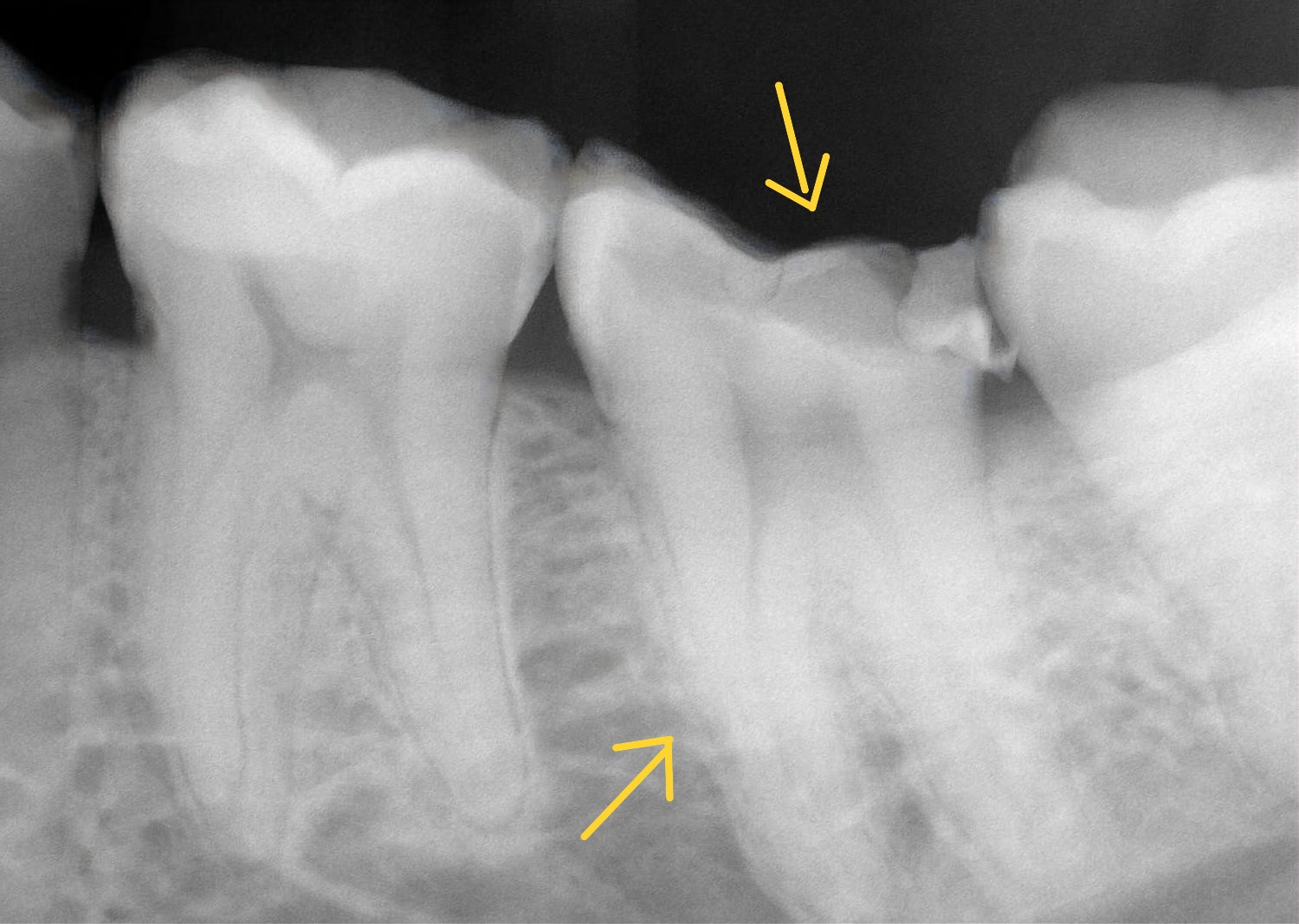
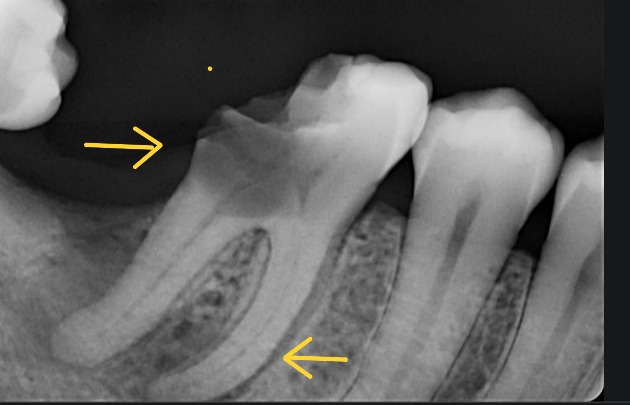
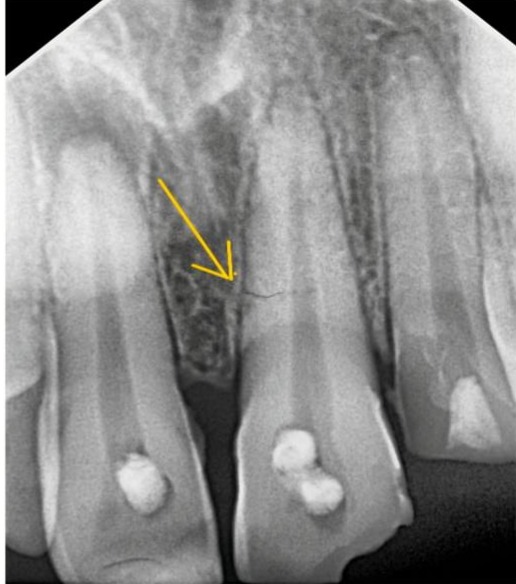
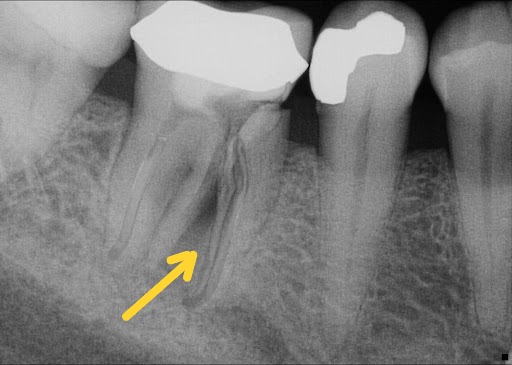
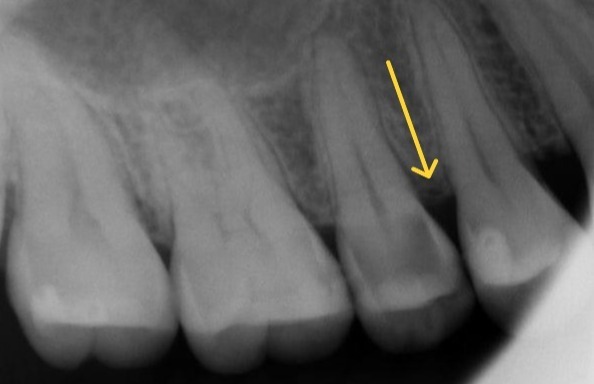
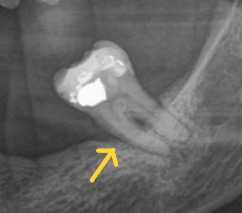
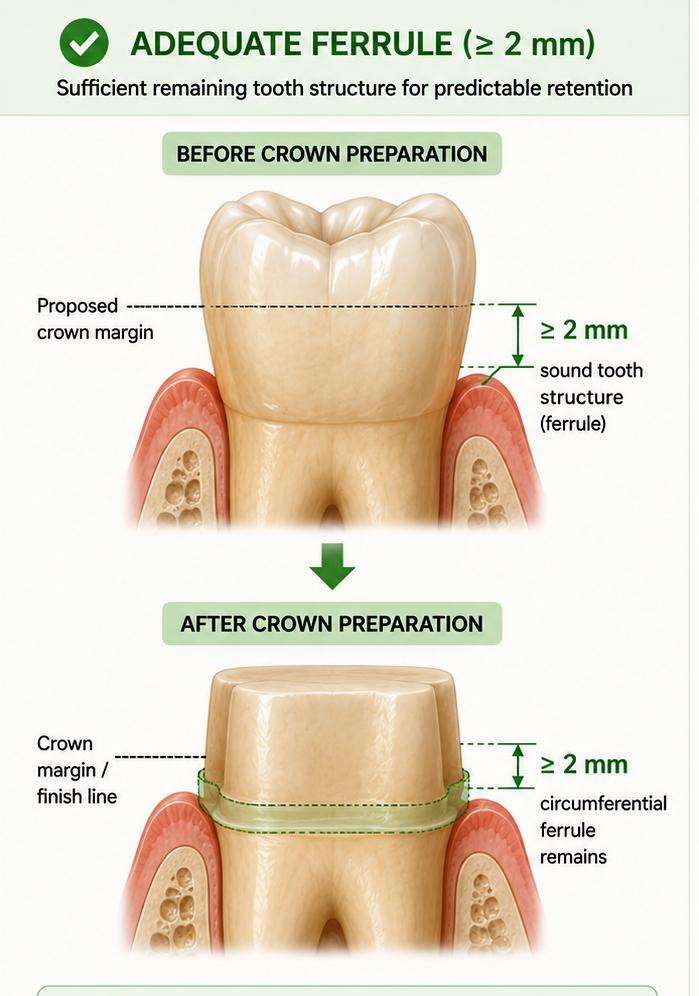
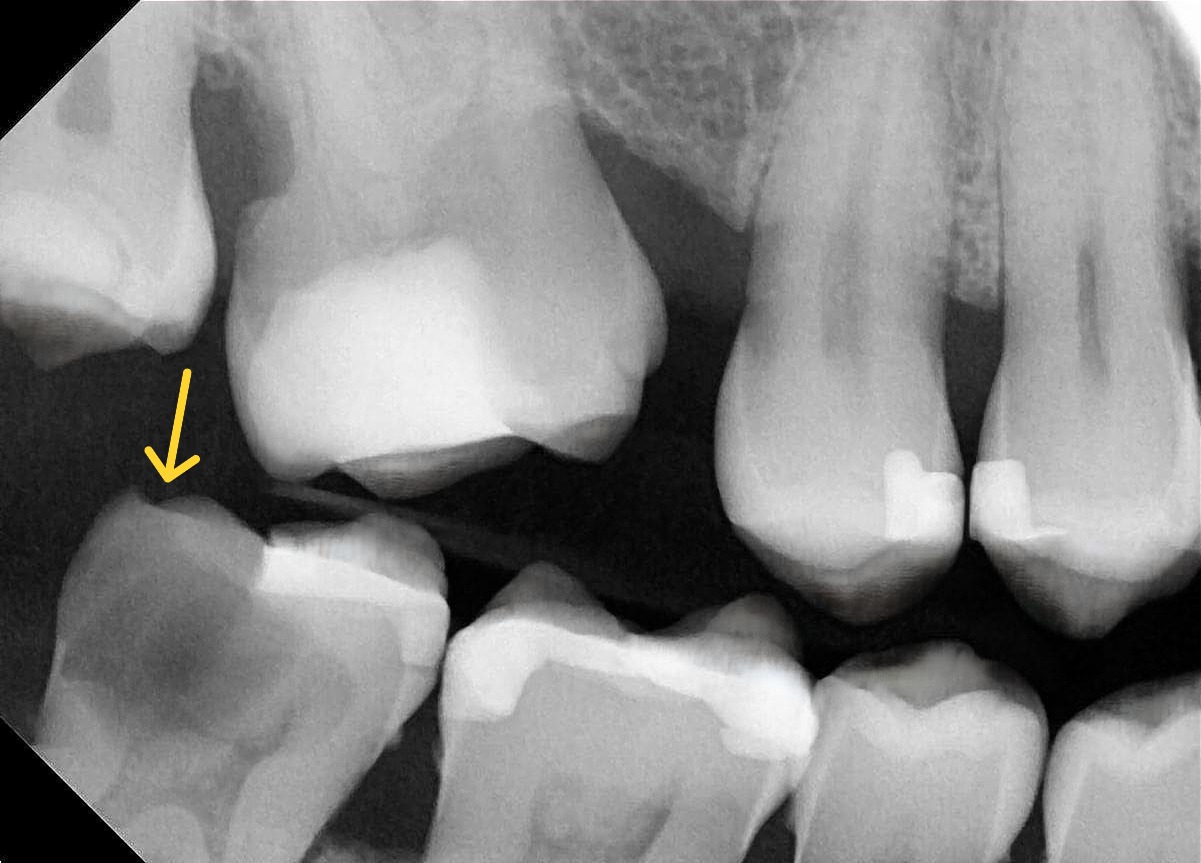
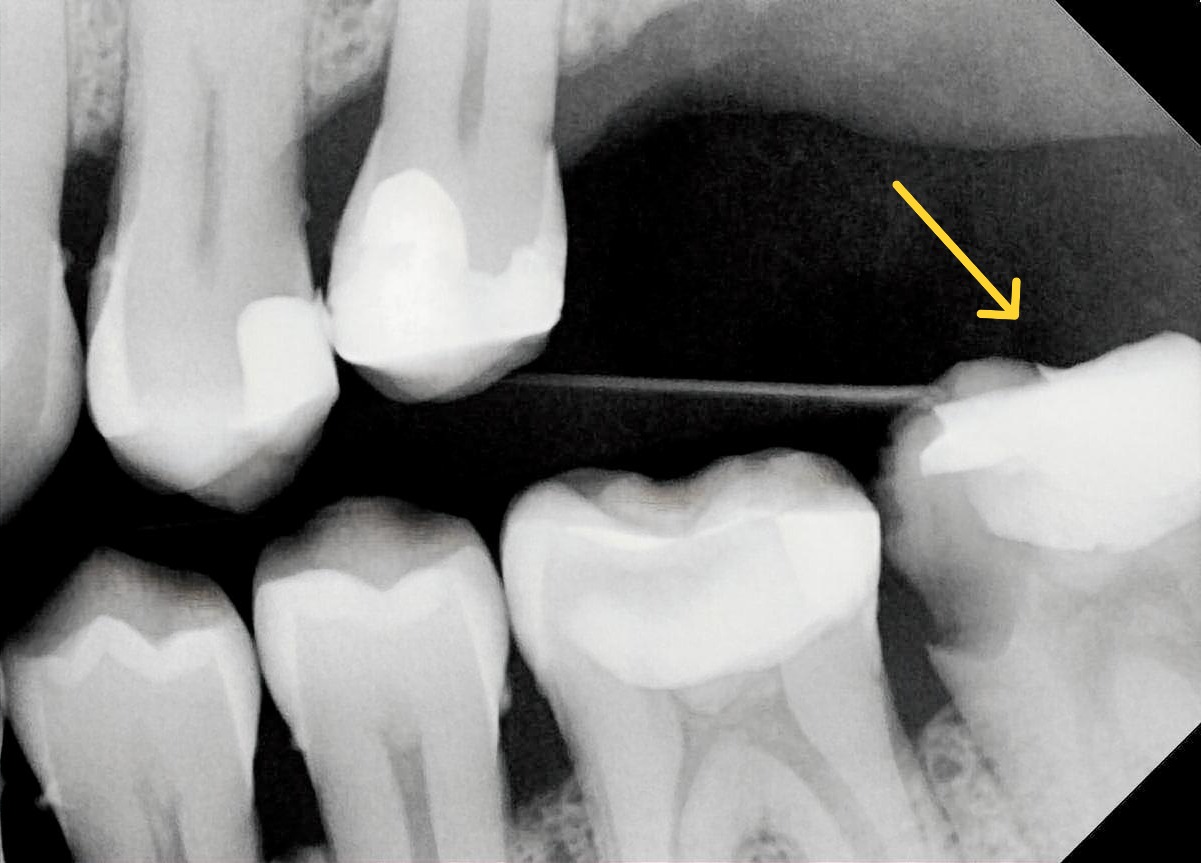
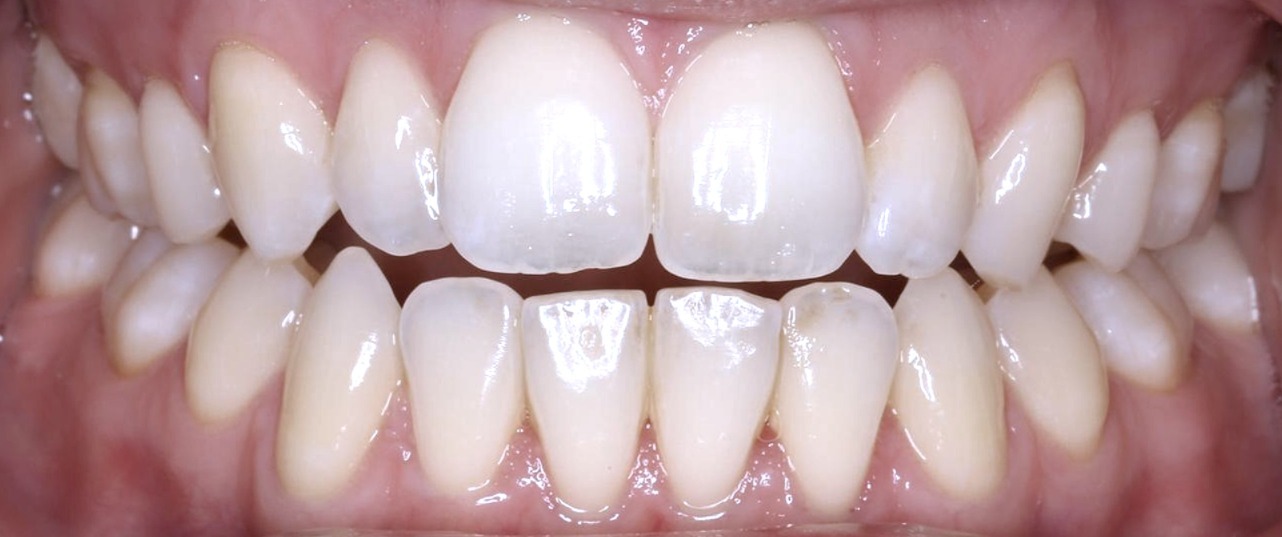
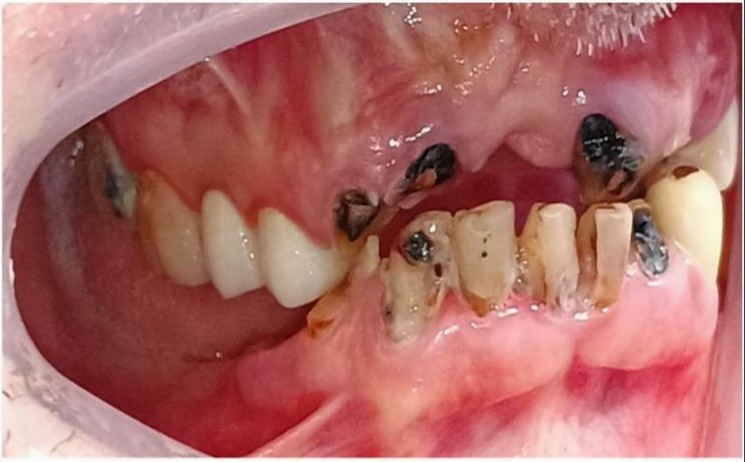
Clinical Essentials
Without a durable restorative endpoint, RCT may improve neither tooth survival nor treatment value.
Clinical Assessment
Assess:
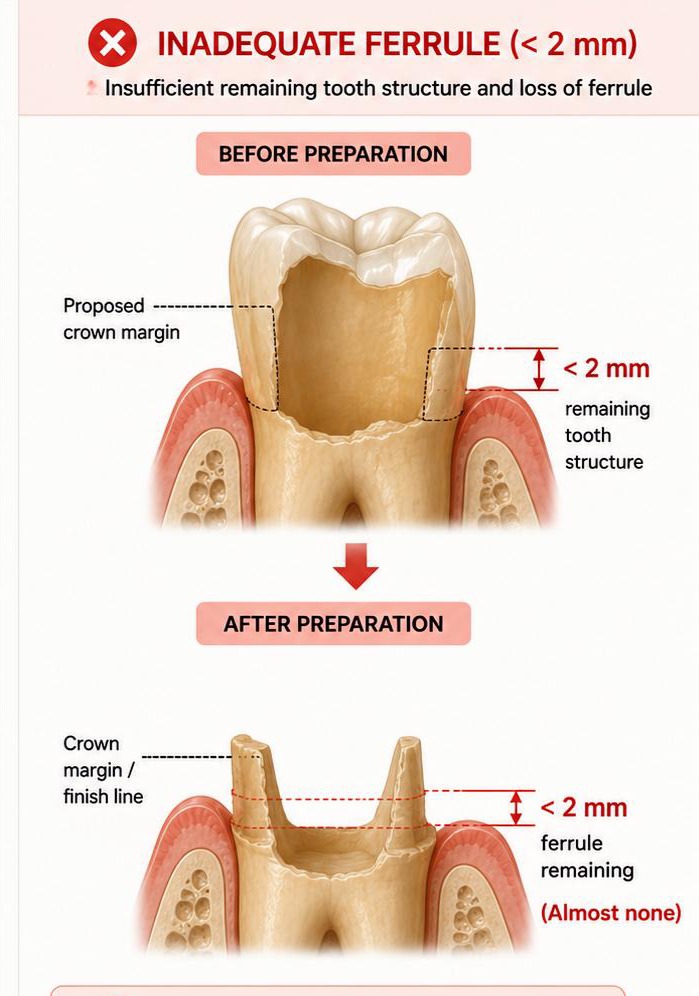
- Remaining sound tooth structure
- Margin location and access
- Existing restorations and undermined cusps
- Extent and pattern of caries or structural loss
- Feasibility of definitive restoration
Clinical Reasoning
Restorability is not just a count of remaining walls. The key issue is whether the remaining tooth can support a definitive restoration with acceptable biologic width management, periodontal consequences, and fracture risk.
Cervical structure, margin feasibility, and the ability to create a durable coronal seal are often more prognostically important than pulpal status alone.
⚖️ Clinical Decision Making
A recommendation becomes defensible when independent findings converge.
How Should This Tooth Be Managed?
Clinical judgment in RCT vs extraction is not the selection of the more attractive procedure. It is the recognition of which option the available evidence and findings can honestly support. The stronger the convergence of independent findings, the stronger the recommendation.
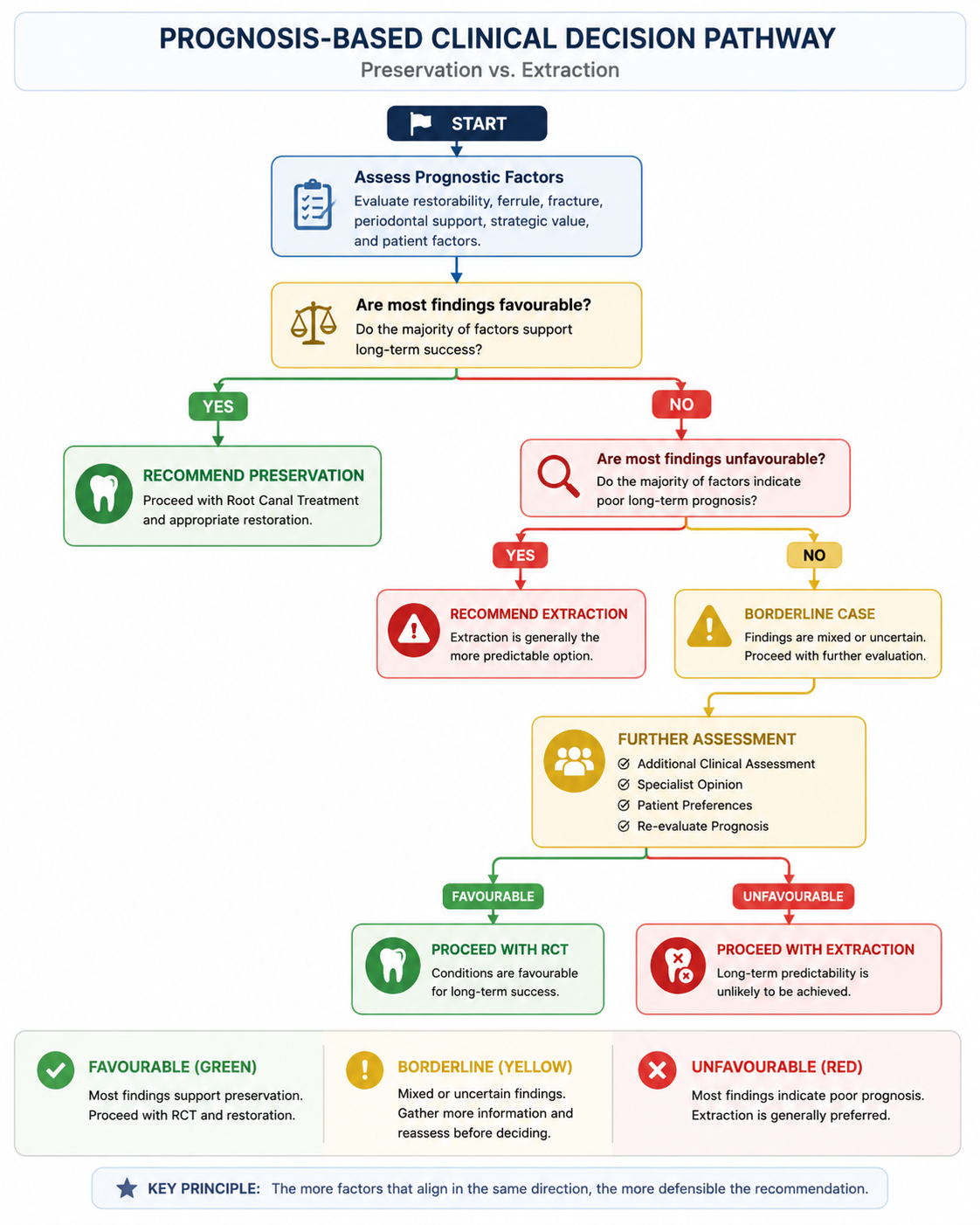
Clinical Decision Framework
How do individual findings become one RCT-vs-extraction recommendation?
When Findings Converge Toward Root Canal Treatment and Retention
Clinical Decision Factors
Typical features include:
- Predictable restorability
- Achievable and meaningful ferrule
- No evidence of non-restorable fracture pattern
- Maintainable periodontal support
- Favorable strategic value
- Patient able to complete and maintain definitive care
Clinical Reasoning
When these factors align, RCT should be viewed as part of a complete retention strategy, not as an isolated procedure.
The relevant endpoint is not obturation; it is a tooth that can be definitively restored, maintained, and expected to function without disproportionate future burden.
📝 Clinical Documentation
Good documentation should allow another clinician to reconstruct why RCT or extraction was recommended.
How Should This Decision Be Documented?
A recommendation that cannot later be reconstructed was not fully documented. In RCT-vs-extraction decisions, the record should show not only what was found, but why those findings supported retention or removal. Documentation should preserve the reasoning, the alternatives considered, the uncertainty present, and the basis on which the final plan was agreed.
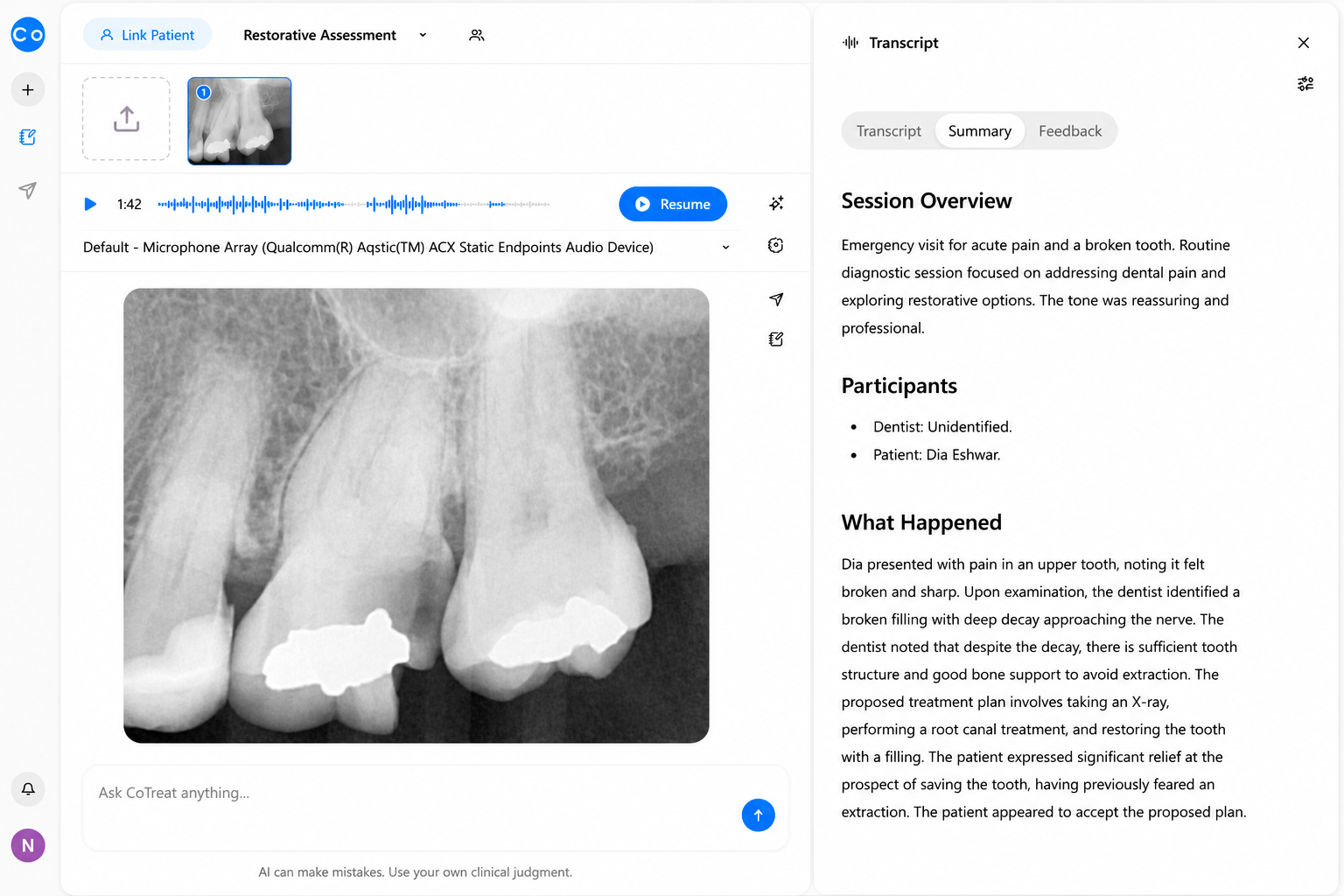
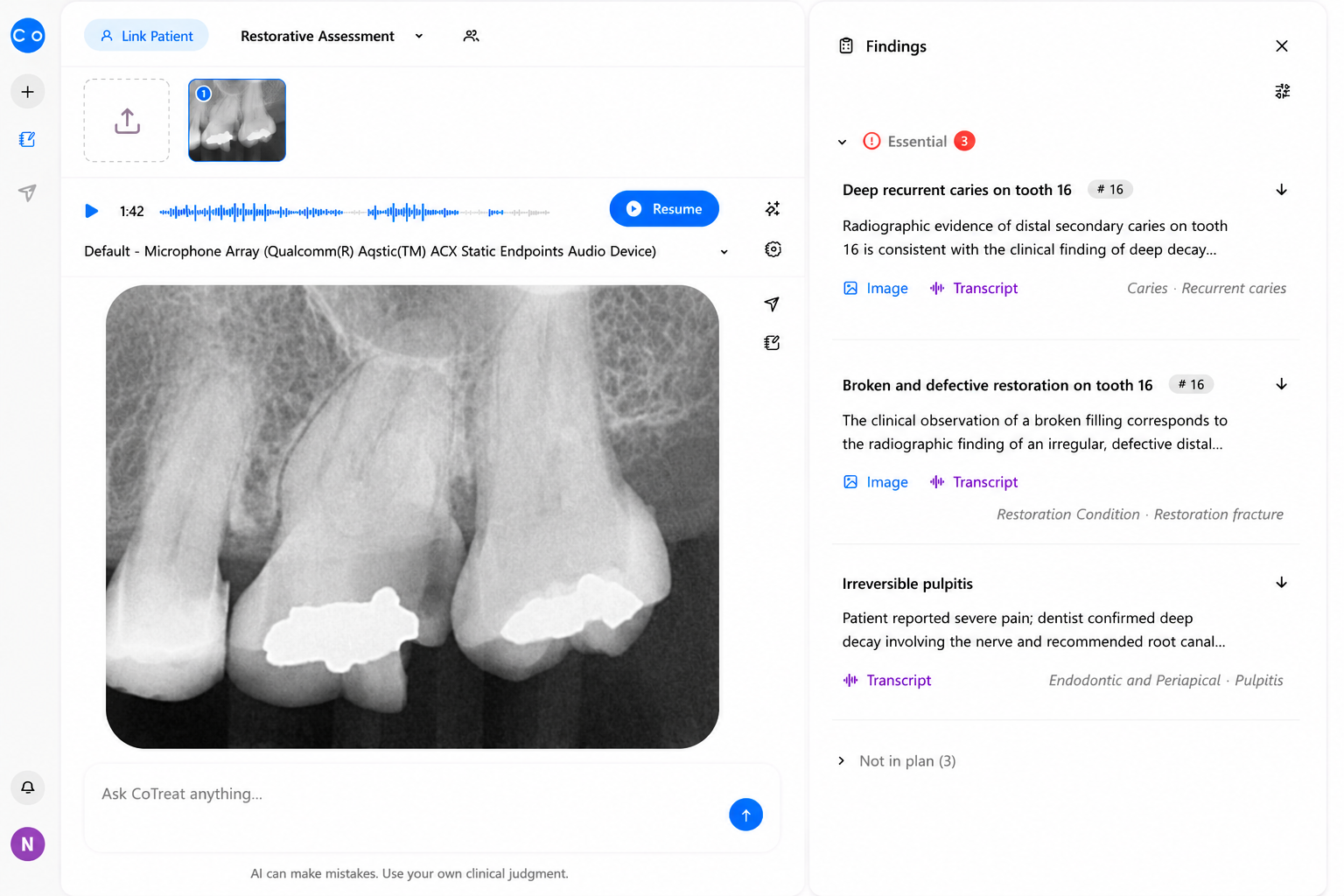
Clinical Documentation Framework
What should every structured clinical record contain?
Clinical Documentation
Record:
- Remaining tooth structure and restorability
- Existing restorations and structural defects
- Crack or fracture findings
- Periodontal status and support
- Radiographic and CBCT findings if obtained
- Ferrule feasibility
- Strategic role in the dentition
Clinical Reasoning
A recommendation is only as defensible as the findings that support it. If the decisive findings are missing from the record, the decision becomes difficult to justify later.
See this workflow in CoTreat Chairside
Explore how consultation, documentation and treatment planning are generated in a real clinical workflow.
Clinical Integration
Good documentation is not simply a treatment record.
It is a record of why RCT or extraction was considered the more predictable pathway. A future clinician should be able to review the chart and understand not only what was done, but why the recommendation was clinically justified.
💬 Patient Communication
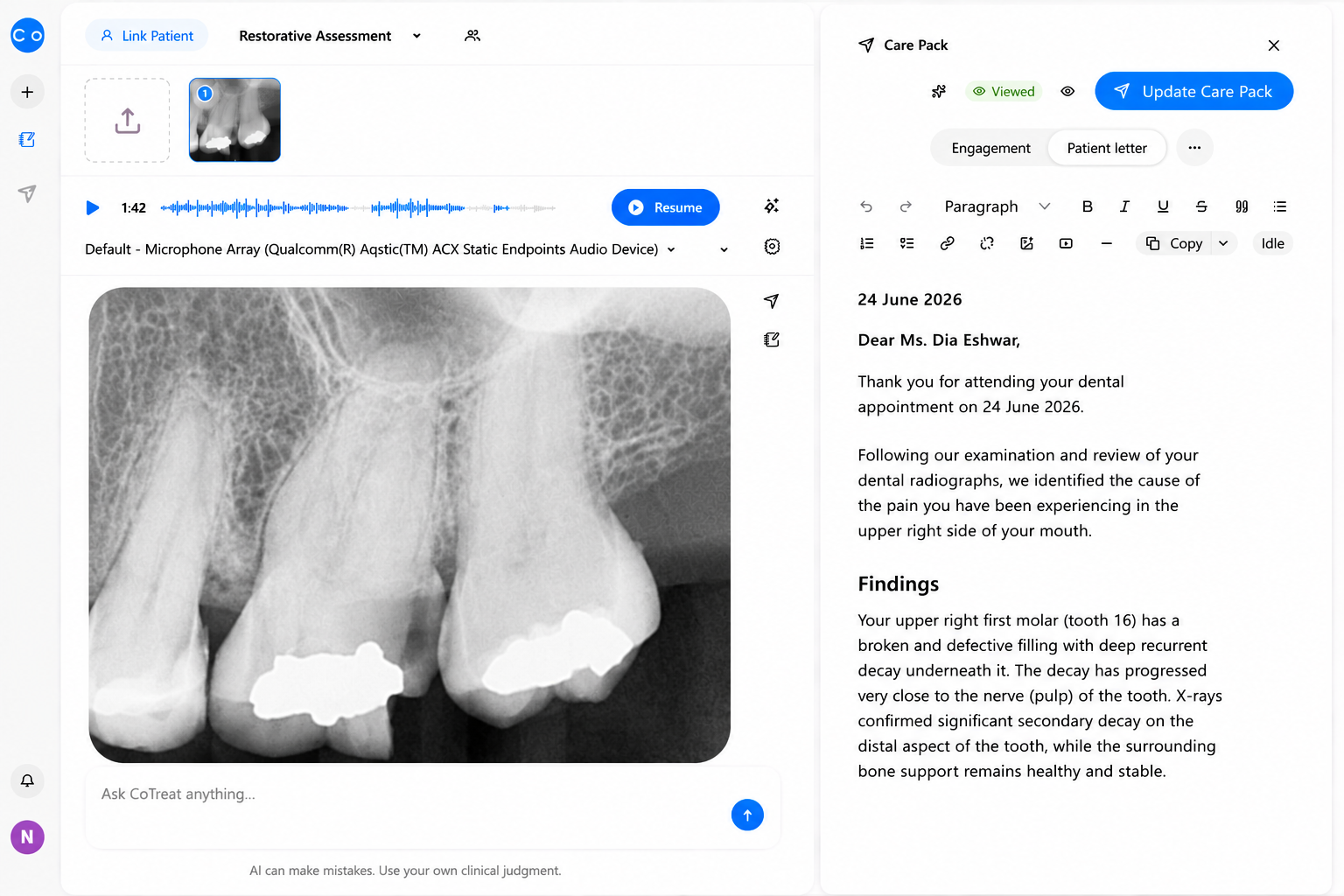
Good communication makes the prognosis understandable, not merely the procedure.
How Should This Recommendation Be Explained?
Patients rarely trust recommendations they do not understand. In RCT vs extraction discussions, the goal is not simply to describe what each procedure is. The goal is to explain why one option is expected to provide the more predictable long-term outcome for this tooth. Shared decision-making should communicate risks, benefits, consequences, and alternatives clearly without overstating certainty.
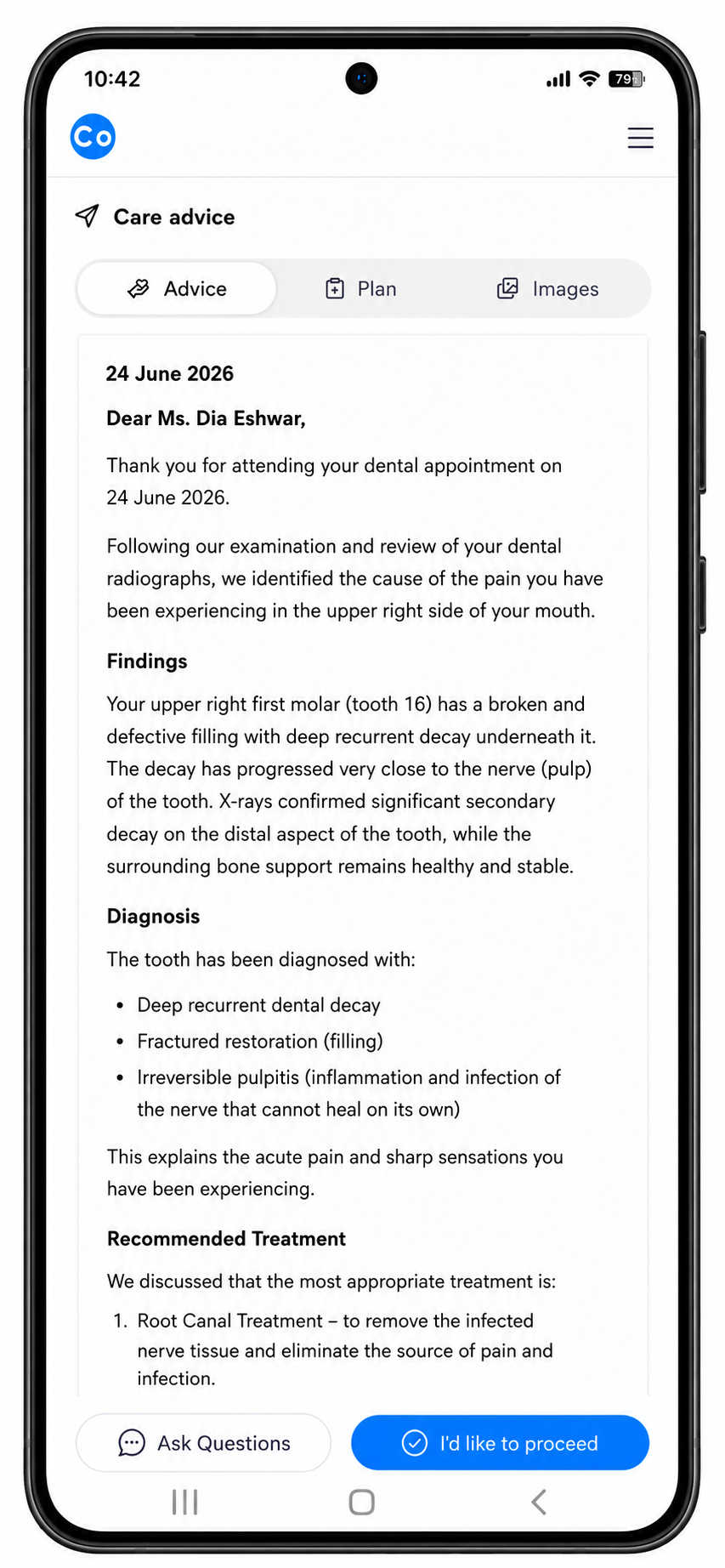
Patient Communication Framework
How can clinical reasoning be translated into patient understanding?
See this workflow in CoTreat Chairside
Explore how consultation, documentation and treatment planning are generated in a real clinical workflow.
Clinical Integration
Good communication does not oversimplify dentistry.
It makes prognosis understandable. When patients understand why a tooth is being retained with RCT, or why extraction is being recommended instead, they are better able to participate confidently and realistically in the decision.
🌍 CoDL Learning
Clinical judgment in RCT-vs-extraction decisions improves through repetition, comparison, and review.
Continue Learning
A single RCT-vs-extraction decision should lead to better future decisions. CoDL exists not only to answer one question, but to strengthen how clinicians assess restorability, fracture prognosis, structural risk, and long-term maintainability across similar cases.
Learning Pathways



CoTreat is building the AI colleague for dentists.
CoTreat makes it easy to go above and beyond for your patient. An AI that supports you in clinic.