
Root Canal
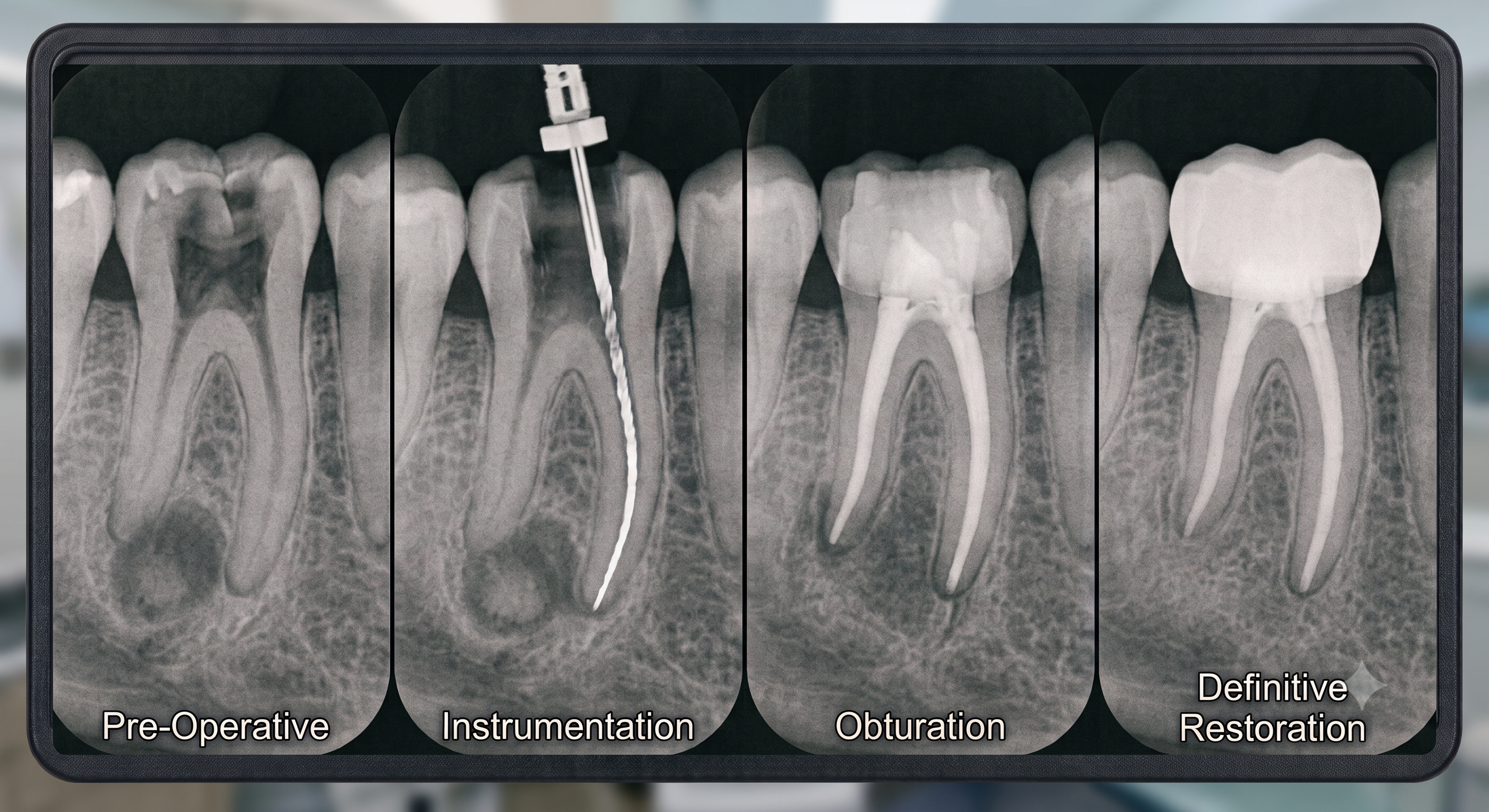
This page explains root canal treatment from pulpal and periapical diagnosis through treatment planning, endodontic procedures, coronal restoration, follow-up, and long-term outcomes. It covers reversible and irreversible pulpitis, pulpal necrosis, apical periodontitis, root canal indications, case selection, treatment timing, prognosis, postoperative symptoms, endodontic complications, retreatment, and referral decisions.
The content outlines how clinicians assess endodontic disease, distinguish conditions that may be managed conservatively from those requiring root canal treatment, and determine when treatment, monitoring, retreatment, extraction, or referral is appropriate. It provides an overview of the complete endodontic pathway and links to detailed evidence-informed articles on diagnosis, treatment planning, procedural complications, restoration, and outcome assessment.
CoTreat is building the AI colleague for dentists.
CoTreat makes it easy to go above and beyond for your patient. An AI that supports you in clinic.