
Why Does My Tooth Feel Pressure After Root Canal Treatment?



Pressure or soreness after root canal treatment can occur because the tissues around the tooth root remain inflamed temporarily while healing takes place.
Bite irritation, healing changes, residual inflammation, or structural stress may also contribute to pressure sensations.
In many cases, symptoms gradually improve over time as the surrounding tissues recover.
Pressure or soreness after root canal treatment is common and is often part of the normal healing process.
Many people expect a treated tooth to feel completely normal immediately after treatment. However, the tissues around the root may remain irritated for a period of time, even after the inside of the tooth has been cleaned and treated.
This can make the tooth feel:
- Tender when biting.
- Slightly raised.
- Bruised.
- Sensitive to pressure.
- More noticeable than neighboring teeth.
In many cases, these sensations improve gradually as healing progresses.
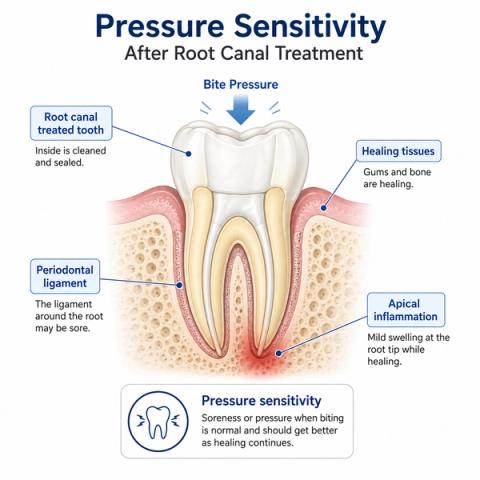
Why Can a Tooth Feel Pressure After Root Canal Treatment?
Even after root canal treatment is completed, the tissues around the root may remain irritated for a period of time.
This can create:
- Pressure sensitivity.
- Soreness when chewing or biting.
- Awareness of the tooth during function.
- Mild tenderness around the area.
- Discomfort when the tooth is tapped.
People commonly describe it as:
- "The tooth feels bruised."
- "I feel pressure when I bite."
- "The tooth feels slightly raised."
- "Chewing feels uncomfortable."
- "The area feels sore when tapped."
In many cases, these sensations improve gradually as healing progresses.
Why Does This Happen?
Pressure sensations commonly occur because:
- Inflammation already existed around the root before treatment.
- The ligament surrounding the tooth remains temporarily sensitive.
- Healing of the surrounding bone and tissues takes time.
- The bite may feel slightly high after treatment.
Chewing and biting forces can temporarily place pressure on:
- Healing tissues around the root.
- Sensitive ligament tissues.
- Surrounding bone.
This type of pressure discomfort is different from the hot or cold sensitivity that may have occurred before treatment.
Why the Pattern of Symptoms Matters
| Symptom Pattern | What It May Suggest |
|---|---|
| Mild pressure gradually improving | Expected healing response |
| Temporary soreness when chewing or biting | Healing tissues around the root |
| Tooth feels slightly "high" | Bite irritation |
| Tooth remains tender when tapped or bitten on | Slower resolution of inflammation |
| Pressure worsening over time | Needs reassessment |
| Swelling with pressure pain | Possible persistent infection |
| Localized biting pain | Possible crack or structural stress |
One pattern deserves special attention:
A tooth that gradually feels less sensitive over time is often following a normal healing pattern. A tooth that becomes more painful or develops swelling should be reassessed.
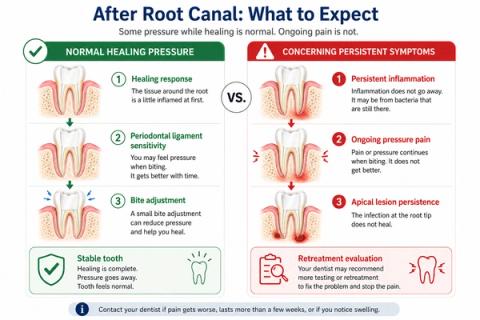
What This Usually Means
The important question is not:
"Does the tooth feel pressure?"
The more important question is:
"Is the surrounding tissue healing normally over time?"
After root canal treatment:
- The tissues around the root may still be recovering.
- Healing changes continue in the surrounding bone.
- The ligament around the tooth may remain sensitive to pressure.
Because of this, chewing or biting can temporarily trigger discomfort even while healing is progressing normally.
However, persistent or worsening pressure may occasionally indicate:
- Ongoing inflammation.
- Bite imbalance.
- Crack-related stress.
- Persistent infection.
- Delayed healing.
Dentists focus on whether the tooth is steadily improving, remaining stable, or showing signs that further treatment may be needed.
What Should You Do Right Now?
If a root canal-treated tooth feels pressure-sensitive:
- Avoid chewing heavily on that side for a short period.
- Follow any instructions provided by your dentist.
- Maintain good oral hygiene.
- Monitor whether symptoms are improving or worsening.
- Pay attention to changes in biting comfort.
- Arrange follow-up if symptoms persist or become worse.
Most healing-related pressure gradually improves rather than becoming more severe.
When Should You See a Dentist?
You should arrange an examination if:
- Pressure sensitivity worsens.
- Chewing becomes increasingly painful.
- Swelling develops.
- Symptoms persist longer than expected.
- The bite feels uneven.
- Pressure returns after initial improvement.
- A previously improving tooth starts becoming more painful again.
A dentist may evaluate:
- Healing around the root.
- Bite alignment.
- Restoration condition.
- Structural stability.
- Signs of reinfection.
- Whether additional treatment is required.
Early follow-up may help identify delayed healing or other problems before they become more significant.
What Are Dentists Learning About Post-Root Canal Pressure and Healing?
Dentists are becoming better at understanding why some teeth remain pressure-sensitive after root canal treatment even when healing is progressing normally.
Current research focuses on:
- Healing patterns around the root.
- Changes in the ligament surrounding the tooth.
- Early identification of persistent inflammation.
- Bite-related stress after treatment.
- Factors associated with delayed healing.
- Improved imaging of tissues around the root.
Researchers are also exploring AI-assisted tools that may help clinicians distinguish normal healing discomfort from signs that additional treatment may be required.
Related questions
Clinical interpretation
What this means from a clinical perspective.
This patient explanation is supported by a detailed professional review that examines:
- Post-treatment healing dynamics.
- Periodontal ligament inflammation.
- Occlusal overload and bite-related irritation.
- Persistent apical inflammation.
- Differential diagnosis of post-treatment pressure.
- Structural complications after root canal treatment.
- Healing assessment and follow-up.
- Emerging diagnostic technologies.
Related Professional Topics
Key terms
Periodontal Ligament
The periodontal ligament is the thin layer of tissue that connects a tooth to the surrounding bone. It can remain sensitive while healing after root canal treatment.
Root Canal Treatment
Root canal treatment cleans and seals the inside of a tooth to remove infection or damage while preserving the tooth.
Pressure Sensitivity
Pressure sensitivity is discomfort that occurs when biting, chewing, or pressing on a tooth.
Inflammation
Inflammation is the body's response to injury or infection and can continue temporarily while healing occurs.
Dental Bite
A dental bite refers to how the upper and lower teeth come together when closing the mouth.
Dental Crown
A dental crown is a protective covering placed over a tooth to restore strength and function.
Healing Around the Root
Healing around the root refers to recovery of the tissues and bone surrounding a tooth after treatment.
CoTreat is building the AI colleague for dentists.
CoTreat makes it easy to go above and beyond for your patient. An AI that supports you in clinic.