
Why Does My Tooth Hurt When I Lie Down?



If your tooth hurts more when you lie down, changes in blood flow and tissue pressure may be making inflammation inside or around the tooth feel stronger.
Many people notice that sitting upright feels better, while lying flat makes the pain more noticeable.
Pain that becomes worse while resting may suggest that inflammation inside the tooth is progressing and deserves evaluation.
Tooth pain may worsen when you lie down because changes in blood flow and tissue pressure can make inflammation inside the tooth or surrounding tissues feel more noticeable.
Many people notice that a tooth feels relatively manageable while sitting or standing, but begins throbbing or aching once they lie down in bed.
Pain that worsens while lying down is often associated with inflammation inside the tooth, irritation around the root, or pressure-sensitive tissues surrounding the tooth.
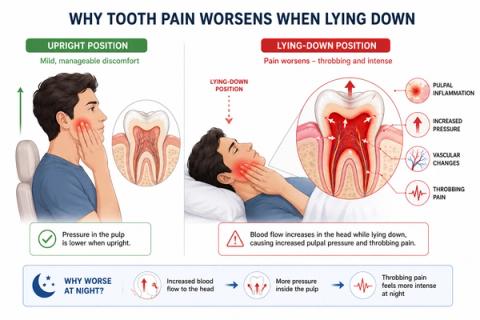
Why Does Tooth Pain Feel Worse When Lying Down?
Some types of tooth pain change depending on body position.
People often describe it as:
- "My tooth throbs when I lie down."
- "The pain feels worse in bed."
- "The tooth hurts more at night."
- "Sitting upright feels better."
- "The pain starts when I'm resting."
- "My tooth throbs without eating or drinking."
This pattern often occurs because inflammation becomes more noticeable when the body is at rest.
It is commonly associated with:
- Inflammation inside the tooth
- Irritation around the root
- Pressure-sensitive tissues
- Advanced sensitivity
The pain itself may not have changed, but your awareness of it and the way inflamed tissues respond to pressure may have changed.
What Happens When You Lie Down?
The nerve and supporting tissues inside a tooth exist within a very small space.
As inflammation develops:
- Pressure becomes harder to regulate.
- Sensitive tissues become more reactive.
- Small changes in blood flow may affect how pain feels.
People may notice:
- Throbbing pain at night
- Lingering sensitivity
- Spontaneous discomfort
- Pain that becomes more noticeable during rest
Some people also experience:
- Hot sensitivity
- Cold sensitivity
- Chewing or biting discomfort
- Pressure-related soreness
Sitting upright may temporarily reduce these symptoms because the pressure changes are less noticeable.
Why the Pattern of Pain Matters
| Pain Pattern | What It May Suggest |
|---|---|
| Throbbing pain while lying down | Inflammation inside the tooth |
| Relief while sitting upright | Pressure-related inflammatory behaviour |
| Pain worse at night | Increasing inflammation |
| Lingering cold sensitivity | Inflammation inside the tooth |
| Hot sensitivity with throbbing pain | More advanced inflammation |
| Pain during chewing or biting | Root-area irritation or structural stress |
| Facial pressure with upper tooth pain | Possible sinus involvement |
Dentists often focus on:
- Whether body position changes the pain
- Whether symptoms occur without a trigger
- Whether temperature affects the tooth
- Whether symptoms are changing over time
The way pain responds to position can sometimes provide valuable clues about what is happening inside the tooth.
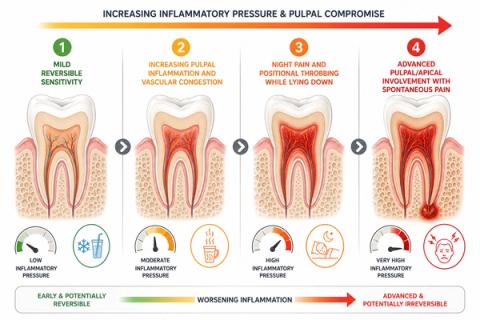
What This Usually Means
Pain that worsens while lying down does not automatically mean severe infection.
However, it often suggests that inflammation inside or around the tooth is becoming more significant.
Symptoms may gradually progress from:
- Mild intermittent sensitivity
- Tooth pain that comes and goes
- Increased sensitivity to hot or cold
- Pain during rest
- Throbbing pain while lying down
- Spontaneous discomfort
The pattern of symptoms over time is usually more important than any single episode of pain.
What Should You Do Right Now?
If your tooth hurts more when you lie down:
- Pay attention to whether sitting upright relieves the pain.
- Notice whether hot, cold, or pressure trigger symptoms.
- Avoid repeatedly testing the tooth.
- Maintain good oral hygiene.
- Avoid chewing heavily on the painful side.
- Arrange a dental evaluation if symptoms continue.
These observations may help identify the cause more quickly.
When Should You See a Dentist?
You should arrange an examination if:
- Pain consistently worsens when lying down.
- Throbbing pain develops at night.
- Sensitivity lingers after hot or cold foods.
- Pain occurs without a trigger.
- Swelling develops.
- Chewing or biting becomes uncomfortable.
- Symptoms are becoming more frequent or severe.
Pain that repeatedly worsens while resting is generally not considered normal.
What Are Dentists Learning About Positional Tooth Pain?
Dentists are learning more about how body position and pain patterns may help identify different stages of tooth inflammation.
Research suggests that positional pain, especially when combined with lingering sensitivity, spontaneous pain, or night-time symptoms, may provide important clues about the health of the tooth nerve. Advances in imaging, vitality testing, and AI-assisted diagnostic tools may help identify high-risk teeth earlier and more accurately than in the past.
Related questions
Clinical interpretation
What this means from a clinical perspective.
This patient explanation is supported by a detailed professional review that examines:
- Positional tooth pain
- Differential diagnosis
- Pulpal versus periapical causes
- Sinus-related considerations
- Symptom progression
- Diagnostic testing
Related Professional Topics
Key terms
Positional Pain
Positional pain is discomfort that changes depending on body position, such as becoming worse while lying down.
Dental Pulp
The dental pulp is the soft tissue inside the tooth that contains nerves and blood vessels. Inflammation of this tissue can cause throbbing or pressure-related pain.
Inflammation
Inflammation is the body's response to irritation or injury. Increased inflammation often changes how a tooth reacts to pressure, temperature, and body position.
Spontaneous Pain
Spontaneous pain occurs without an obvious trigger such as eating, drinking, or chewing.
Sinus Pressure
Sinus pressure refers to increased pressure within the sinus cavities. In some cases, it may create discomfort that feels similar to tooth pain, particularly in upper back teeth.
CoTreat is building the AI colleague for dentists.
CoTreat makes it easy to go above and beyond for your patient. An AI that supports you in clinic.