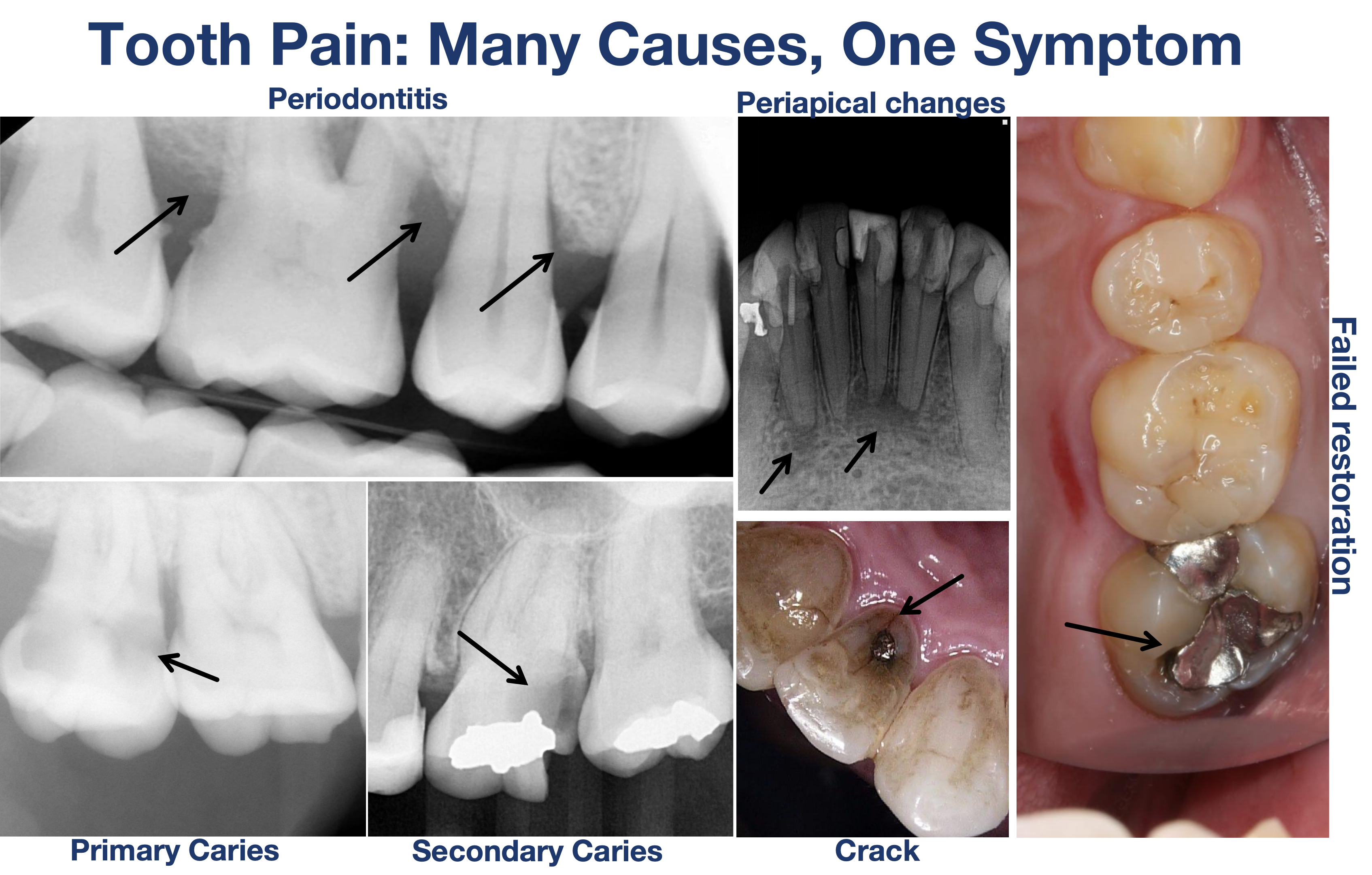
Structured clinical interpretation of dental pain patterns — including chewing pain, intermittent pain, night pain, thermal sensitivity, and load-related symptoms — to help differentiate pulpal, periodontal, structural, and apical causes through symptom behavior, progression, and response patterns.
Tooth pain is one of the most common reasons patients seek dental care, yet pain alone rarely identifies the underlying disease. Accurate diagnosis requires integrating the patient's history, pain characteristics, clinical examination, special tests, and radiographic findings.
This hub is organised around clinical pain patterns rather than isolated diagnoses, helping clinicians move from presenting symptoms to structured clinical reasoning. Start with the pain pattern that best matches your patient's presentation, then follow the linked articles for deeper diagnostic interpretation and management considerations.
Enlarge
Image caption: Tooth pain is a clinical finding, not a diagnosis. Accurate interpretation depends on history, examination, clinical testing, and radiographic findings.
Quick clinical questions and answers for tooth pain assessment
Where is the pain coming from?
Pain location does not always identify the diseased tooth.
What does the pain pattern tell you?
Pain patterns narrow the differential diagnosis but should never be interpreted in isolation.
Is intermittent pain reassuring?
Not necessarily. Fluctuating symptoms may still indicate active disease.
Is imaging enough?
Radiographs support diagnosis but do not replace clinical assessment.
Should treatment begin immediately?
Establish the diagnosis first, then select the most appropriate management.
Clinical Question
Key Point
Where is the pain coming from?
Pain location does not always identify the diseased tooth.
What does the pain pattern tell you?
Pain patterns narrow the differential diagnosis but should never be interpreted in isolation.
Is intermittent pain reassuring?
Not necessarily. Fluctuating symptoms may still indicate active disease.
Is imaging enough?
Radiographs support diagnosis but do not replace clinical assessment.
Should treatment begin immediately?
Establish the diagnosis first, then select the most appropriate management.
The evaluation of tooth pain follows a structured sequence of clinical decisions, from the initial presentation through diagnosis, management, and follow-up. Each step builds on the information gathered previously, helping clinicians move from presenting symptoms to structured clinical reasoning, diagnosis, and appropriate management.
1
2
3
4
5
6
7
8
9
Once the clinical pathway has narrowed the diagnostic possibilities, the next step is to recognise the dominant pain pattern and explore the most relevant clinical presentation.
⚙️
Functional & Structural Pain
Pain during chewing, biting, or occlusal loading often reflects functional or structural disease and should prompt assessment of pulpal, periodontal, and restorative causes.