
Use this hub to navigate the clinical evaluation of tooth sensitivity and dental caries, from symptom assessment and lesion detection to risk assessment, disease progression, management, and follow-up.
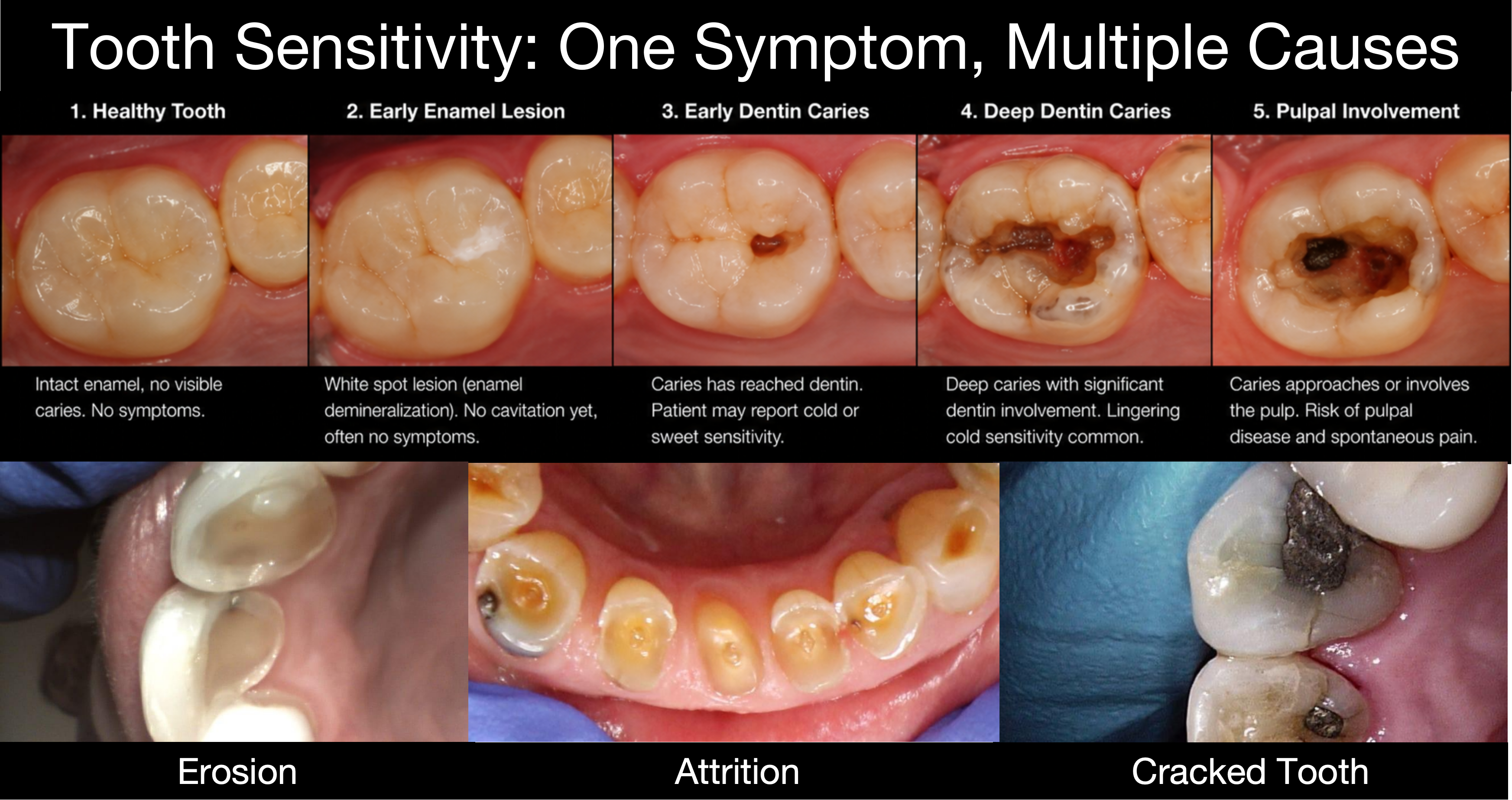
Tooth sensitivity is a common clinical presentation with a broad differential diagnosis. It may arise from exposed dentine, early or advanced dental caries, restorative procedures, periodontal disease, pulpal inflammation, structural defects, or other non-carious conditions. Accurate diagnosis depends on integrating the patient's history, clinical examination, lesion assessment, special tests, and radiographic findings.
This hub is organised around the clinical assessment of the sensitive tooth, guiding clinicians from symptom recognition through lesion assessment, disease progression, differential diagnosis, and management rather than presenting isolated diagnoses. Begin with the presentation that best matches your patient, then follow the linked articles for detailed interpretation and management.
Where is the sensitivity coming from?
Sensitivity has multiple possible causes.
Is there caries?
Sensitivity does not always mean dental caries.
Is the lesion active?
Activity assessment guides management.
How advanced is the disease?
Progression helps determine pulpal risk.
Could this be something else?
Alternative diagnoses must be considered.
| Clinical Question | Key Point |
|---|---|
| Where is the sensitivity coming from? | Sensitivity has multiple possible causes. |
| Is there caries? | Sensitivity does not always mean dental caries. |
| Is the lesion active? | Activity assessment guides management. |
| How advanced is the disease? | Progression helps determine pulpal risk. |
| Could this be something else? | Alternative diagnoses must be considered. |
Patient presents
History
Clinical examination
Sensitivity pattern recognition
Lesion detection
Lesion activity and pulpal risk assessment
Diagnostic synthesis
Management
Review
Outcome
The following framework mirrors the clinical reasoning process used when evaluating a patient with tooth sensitivity. Begin by characterising the presenting symptom, then assess the underlying lesion, determine disease progression, and consider alternative diagnoses before planning management.
1. Characterise the Sensitivity
These are the presenting complaints.
2. Is Caries Present?
These pages help determine whether caries is present.
3. How Advanced Is the Disease?
These pages explain where the lesion sits on the biologic continuum.
4. Could It Be Something Else?
These pages help rule out other causes.
CoTreat is building the AI colleague for dentists.
CoTreat makes it easy to go above and beyond for your patient. An AI that supports you in clinic.