
Sensitivity / Decay
Learn why teeth become sensitive, how cavities develop, what your symptoms may mean, when to see a dentist, and where to find answers to common questions.
Clinical Overview
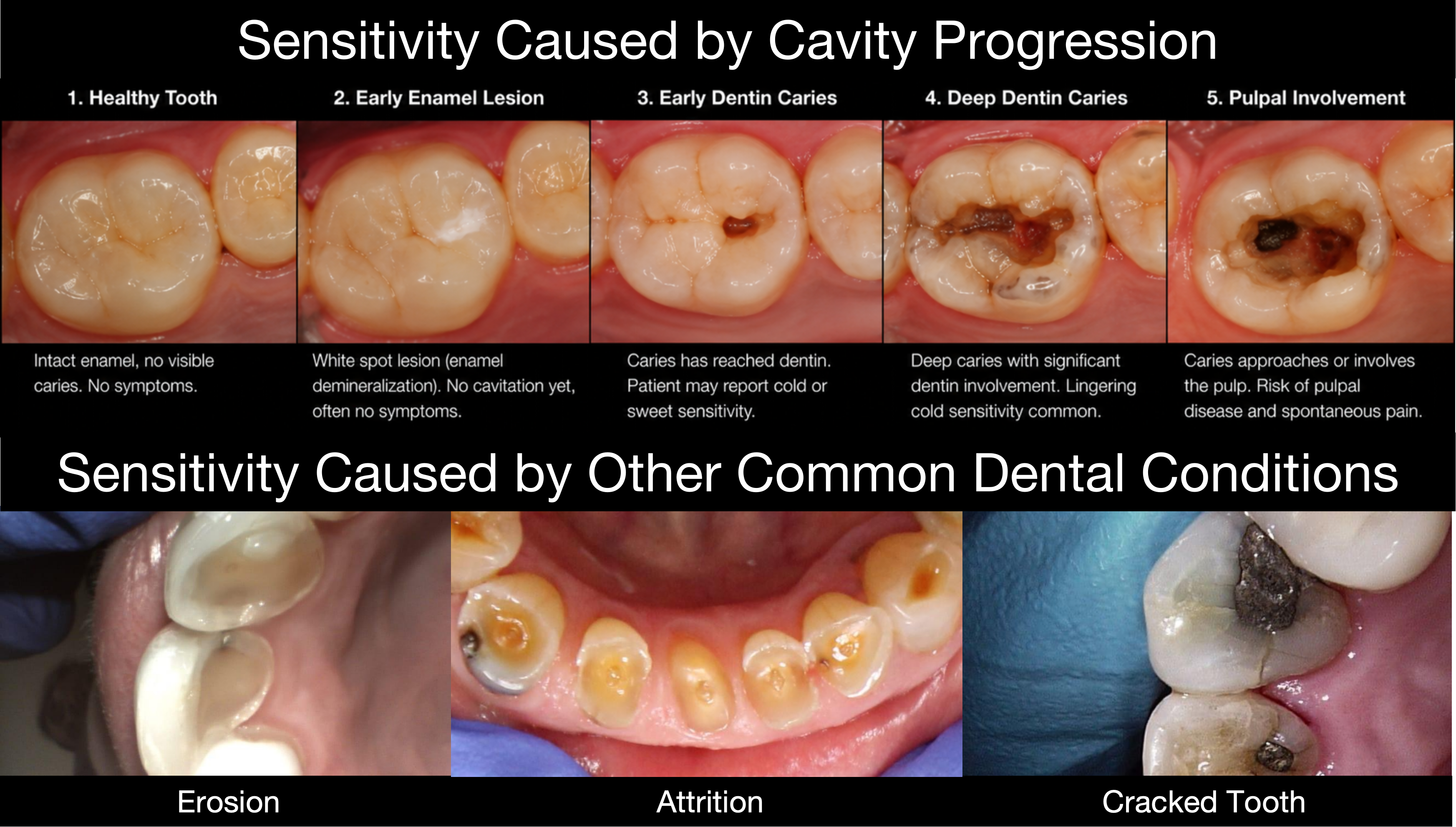
Tooth sensitivity and cavities are among the most common dental concerns. Many people experience sensitivity to cold, sweet foods, or brushing, and wonder whether it means they have a cavity. While tooth decay is one possible cause, sensitivity can also result from worn enamel, exposed tooth roots, gum recession, recent dental work, whitening treatments, or other conditions.
This guide explains common causes of tooth sensitivity, how cavities develop over time, what your symptoms may mean, and when it is time to see a dentist. If your symptoms match one of the situations below, explore the linked pages to learn more.
QuestionWhy are my teeth suddenly sensitive?
Quick answerSensitivity has many possible causes, including cavities and worn tooth surfaces.
QuestionDoes sensitivity always mean I have a cavity?
Quick answerNo. Several non-cavity conditions can also cause sensitivity.
QuestionCan cavities heal on their own?
Quick answerVery early damage may sometimes be managed, but established cavities usually need treatment.
QuestionWill sensitivity turn into tooth pain?
Quick answerSometimes. Persistent sensitivity should be assessed before symptoms worsen.
QuestionWhen should I see a dentist?
Quick answerPersistent, worsening, or severe sensitivity should be checked.
| Question | Quick answer |
|---|---|
| Why are my teeth suddenly sensitive? | Sensitivity has many possible causes, including cavities and worn tooth surfaces. |
| Does sensitivity always mean I have a cavity? | No. Several non-cavity conditions can also cause sensitivity. |
| Can cavities heal on their own? | Very early damage may sometimes be managed, but established cavities usually need treatment. |
| Will sensitivity turn into tooth pain? | Sometimes. Persistent sensitivity should be assessed before symptoms worsen. |
| When should I see a dentist? | Persistent, worsening, or severe sensitivity should be checked. |
Not every sensitive tooth has the same cause. Some people notice discomfort when drinking cold water, eating sweets, brushing their teeth, or after whitening treatment. Others experience sensitivity in only one tooth or develop sensitivity that gradually becomes pain.
The way your symptoms behave provides important clues that help your dentist narrow down the cause. However, only a dental examination can confirm what is responsible for your symptoms.
CoTreat is building the AI colleague for dentists.
CoTreat makes it easy to go above and beyond for your patient. An AI that supports you in clinic.